
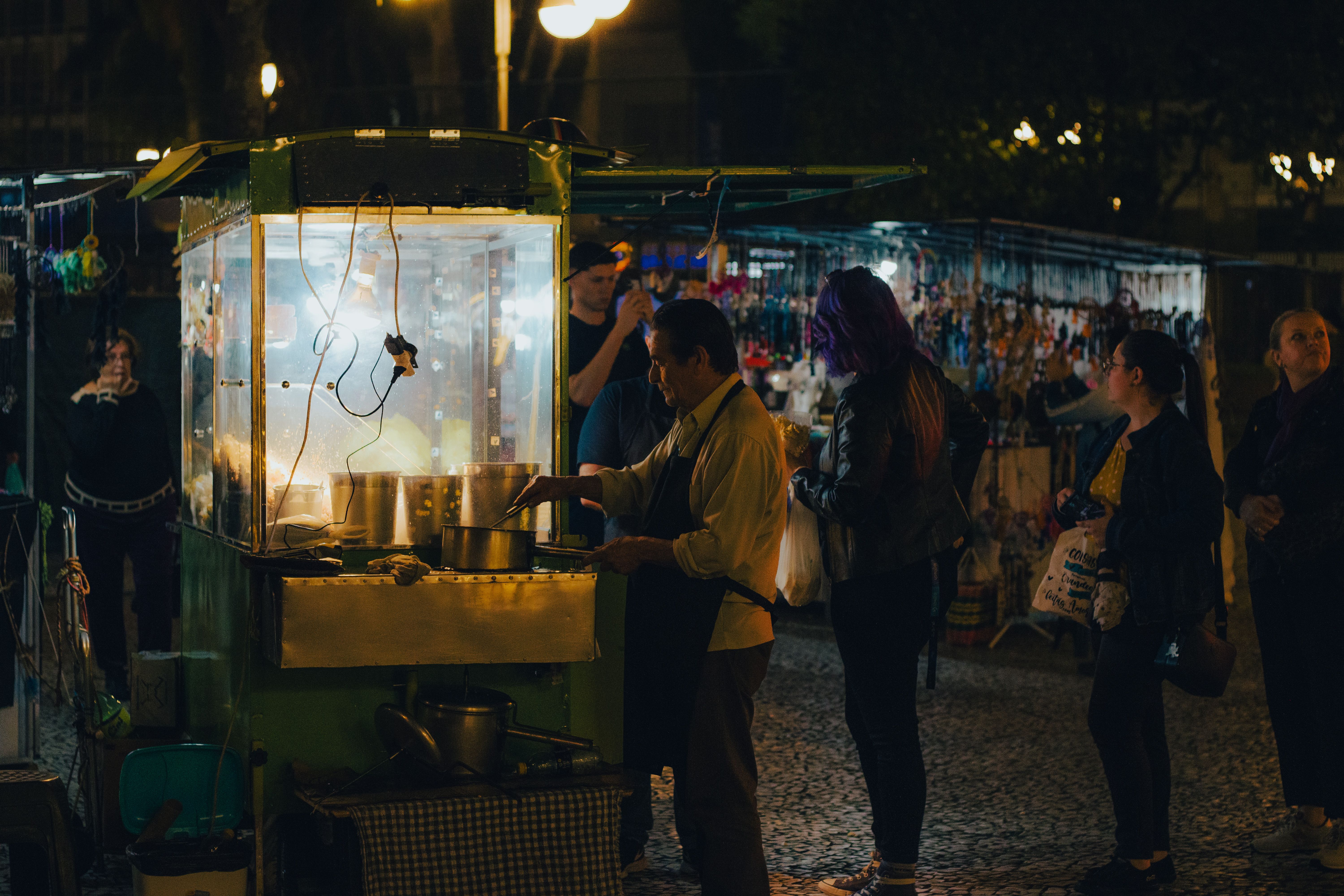
Look along any street food row and the same piece of equipment keeps appearing: a large flat plate over a steady flame. Its dominance is a matter of throughput.
A flat plate is several stoves at once
Heat from a burner underneath spreads outward and weakens towards the edges, giving one surface a continuous range of temperatures.
The vendor treats that gradient as zones, searing in the centre, cooking through halfway out and holding finished portions at the cool rim.
One flame therefore performs the work of separate high, medium and warming stations, without the vendor moving from where they stand.
Cooking and holding happen on the same surface
In most kitchens a finished item leaves the heat and begins to cool. On a griddle it simply moves to a cooler patch and waits without deteriorating.
That lets a vendor start the next order before the current one is collected, so the queue never waits on a single cooking cycle.
It also means an item can be finished and then revived with a brief return to the hot zone, which is why griddle food arrives hot even at peak.
Contact cooking is fast and forgiving
Direct contact with hot metal transfers heat far more efficiently than hot air, so browning develops in a fraction of the time an oven would need.
Because the food sits on the surface rather than inside a vessel, the cook sees the whole process and can lift, press or move anything at any moment.
Nothing is hidden, so errors are caught while they are still correctable, which matters when the cook is also taking money and talking to the queue.
The surface improves with use
A well-used griddle carries a polymerised layer built up from oil and repeated heating, which reduces sticking and makes browning more even.
That layer is destroyed by aggressive cleaning, so vendors scrape and wipe rather than scrub, and the plate is rarely allowed to cool fully during trading hours.
A griddle that has run for years cooks differently from a new one, which is part of why an established stall is hard for a newcomer to match.
It scales without new skills
Increasing output means using more of the plate, not learning a different method, so a vendor can grow into busier pitches with the same technique.
A larger plate can also carry a second cook working the far end during peak periods and one cook the rest of the day.
Few pieces of cooking equipment flex that widely, which is why the griddle survives every change in what is being cooked on it.