
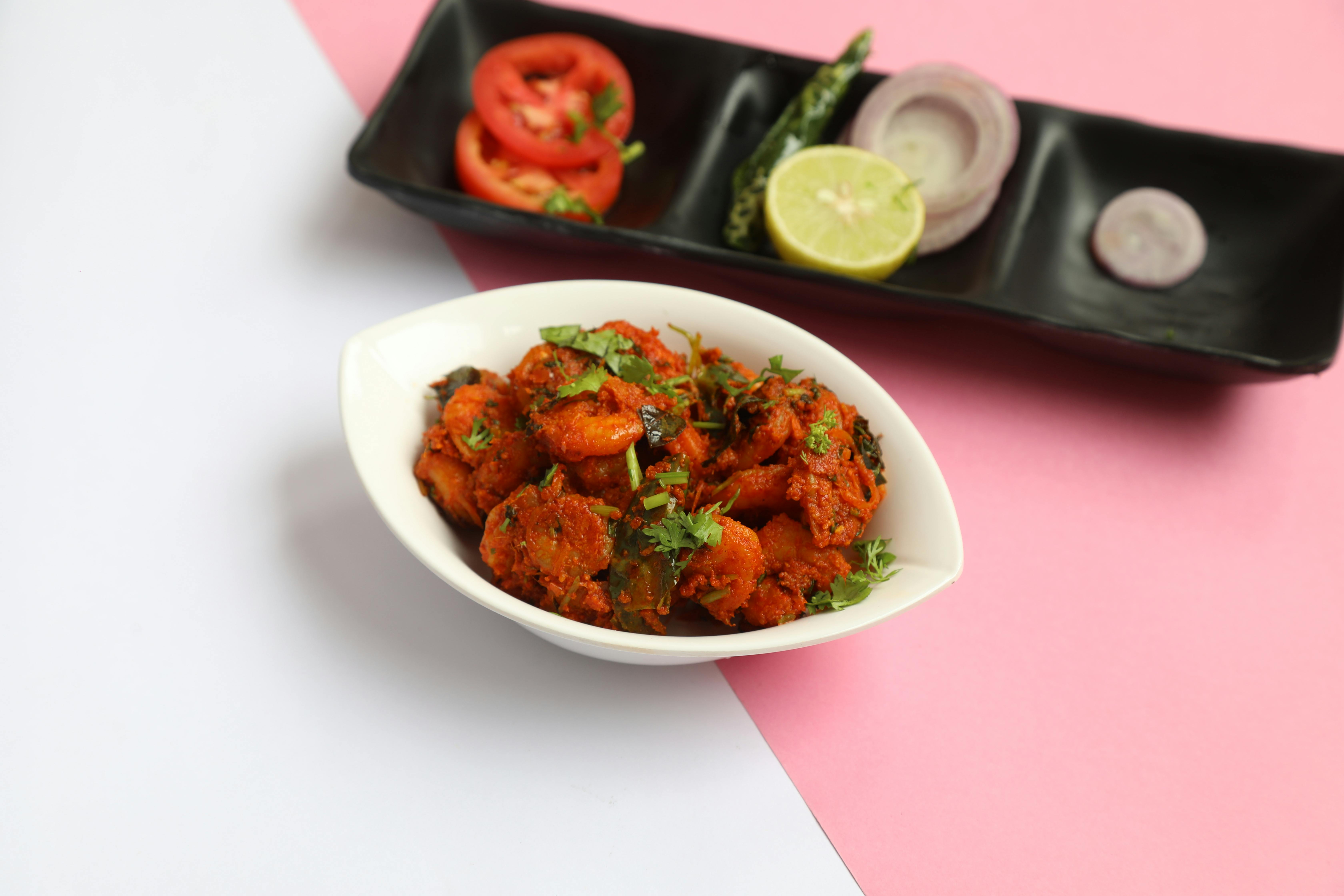
The thali — a plate with several small portions rather than one large dish — is a traditional format across much of the subcontinent, with regional variations in what appears.
Looked at nutritionally, it embodies several principles that dietary guidance struggles to convey, and it does so without any explicit nutritional reasoning.
What's on it
The composition varies enormously by region and community, and a common structure recurs.
A grain — rice, roti, or both. A pulse preparation. One or more vegetables, cooked differently from each other. Something fermented or cultured, frequently yoghurt. Something raw — salad, onion, chutney. Something pickled or sour. Sometimes a small sweet.
Why the structure works
Complementary protein without needing to know about it. Cereals are relatively low in lysine; pulses are relatively low in methionine. Eaten together they complement each other, producing a better amino acid profile than either alone.
This isn't a discovery of modern nutrition — the combination appears in traditional cuisines worldwide, presumably because people noticed it worked. Rice and dal, roti and chana, and their equivalents elsewhere.
Portion control by architecture. Small bowls of several things limit the quantity of any one. Compare with a single large plate of one dish, where the portion is determined by how much you serve.
The visual variety also appears to affect satiety. Research on eating behaviour suggests that variety within a meal can increase intake, and that the effect depends on how the variety is structured — small portions of many things tend to produce a sense of a complete meal at lower volume.
Fibre from multiple sources. Pulses, vegetables, whole grains where used. Fibre intake is inadequate in most modern diets and this format delivers it from several directions.
Fermented components. Yoghurt, pickles, and in some regions fermented batters. These predate any discussion of microbiota and appear across traditional cuisines.
Something sour and something raw. Both aid digestion in ways traditionally understood, and the raw component contributes vitamins degraded by cooking.
The sequencing
An element that gets less attention. Traditional practice frequently involves eating components in a particular order rather than mixing everything.
There's some modern interest in the effect of food order on postprandial glucose, with studies suggesting that eating vegetables and protein before carbohydrate produces a lower glucose response than the reverse.
Whether traditional sequencing corresponds to this is not obvious and the convergence is interesting.
Where modern versions diverge
The format is sound. What's served on it has changed in ways that matter.
Refined grains. Polished white rice and refined flour have largely displaced whole grains and traditional varieties in many households. That removes fibre and micronutrients.
Larger grain portions. The proportion of the plate given to rice or roti has grown relative to vegetables and pulses in many contemporary versions.
More fat and sugar. Restaurant and celebratory versions use considerably more of both than everyday home cooking traditionally did.
Fewer vegetables, less variety. Two vegetables prepared differently has frequently become one.
Which means the format is not automatically healthy — a thali of white rice, fried items and sweets is not delivering what the structure implies.
Applying the principles
Whether or not you eat this way, the structure is portable.
Multiple components rather than one dish. Even three or four small things rather than one large one changes portion dynamics.
Always a pulse or legume. The single highest-value addition to most diets, for protein, fibre and cost.
Two vegetables prepared differently. Different cooking methods give different textures and preserve different nutrients.
Something raw and something sour. Cheap, quick, and it lifts everything else.
Something fermented. Yoghurt is the easiest.
Grain as a component rather than the base. The shift in proportion is the largest available change.
The practical objection
Cooking several things takes longer than cooking one, which is the obvious barrier.
The traditional answer is that most components are made in quantity and kept — dals and pickles last days, chutneys last weeks, and only one or two elements are made fresh at each meal.
That's a different model of cooking from making a complete meal from scratch each time, and it's considerably less work in total. Batch-cooking components rather than meals is the transferable idea, and it works regardless of what cuisine you're cooking.
General information only. Anyone with specific dietary requirements should consult a qualified professional.
The vessel matters slightly
A small practical point. Traditional thalis use separate small bowls for wet preparations rather than pooling them on the plate.
That is not only aesthetic. It keeps components separate so each is tasted distinctly, prevents the dry elements becoming soggy, and lets the eater combine things deliberately rather than having the combination decided by gravity.
It also makes portion sizes visible. A small bowl of dal is obviously a portion; the same quantity ladled onto a plate spreads out and reads as less.
Anyone adapting the format at home will find that separate small bowls change the experience more than the extra washing up costs.