
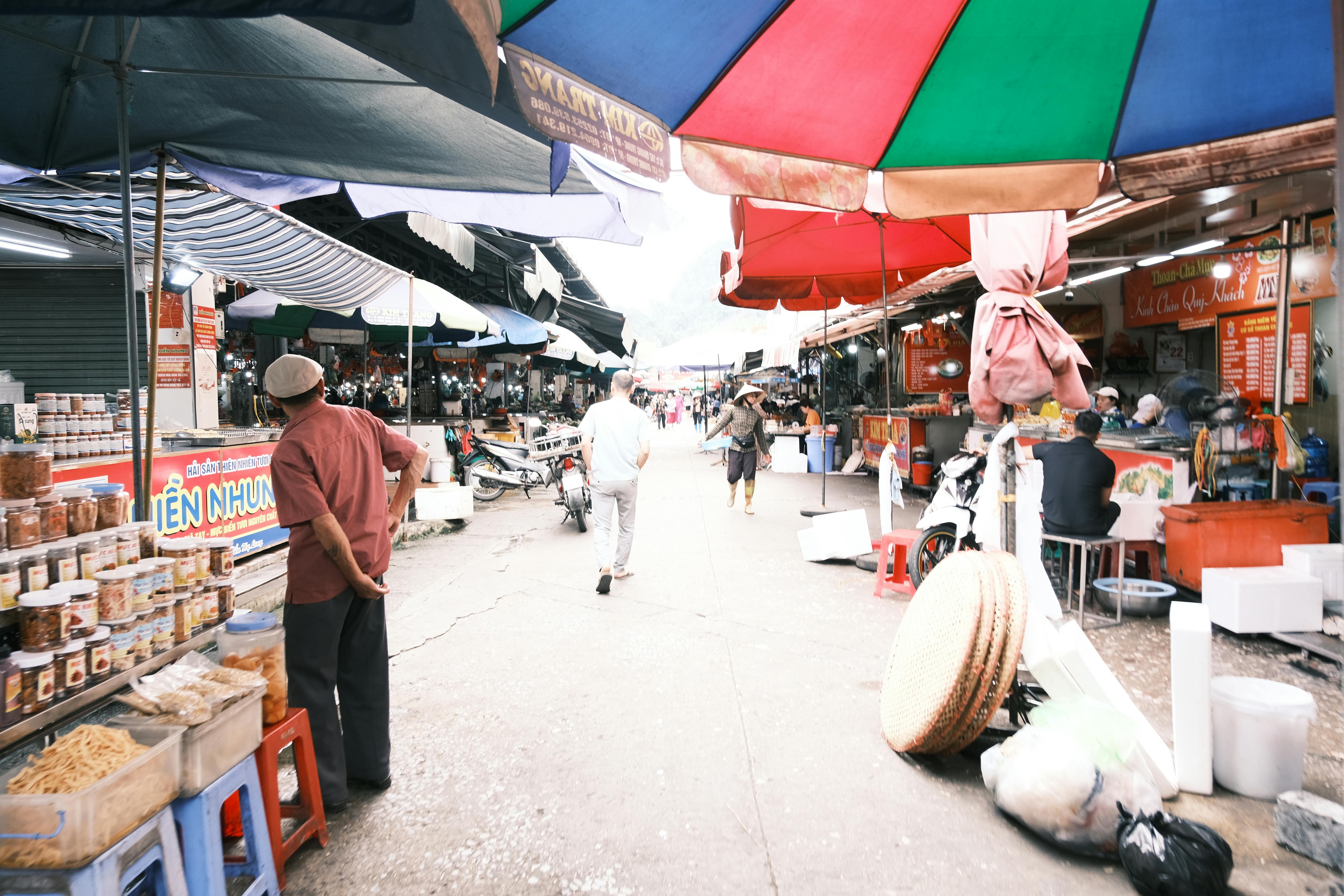
Street vendors selling near-identical food often stand within a few metres of each other while whole streets nearby stay empty. Clustering earns each of them more, not less.
A cluster is a destination, a single stall is a chance encounter
One cart depends on people who happen to pass. A row of carts becomes somewhere people set out for, and travel further to reach.
That converts irregular passing trade into predictable demand, which is worth more to a vendor than being the only option on a quiet street.
The additional customers a cluster draws are usually greater than the share lost to the neighbour, so joining beats isolating.
Choice reduces the risk of arriving
Someone walking to a single stall risks finding it closed, sold out or unappealing that day, and the walk is wasted.
A cluster removes that risk, because something will be open and something will suit, which makes the decision to go easier.
Lower risk means more frequent visits, and frequency is what supports a stall that sells at low margins.
Shared infrastructure is the practical draw
Clusters form where the underlying conditions already work: water access, somewhere to dispose of waste, a place to park a cart overnight, tolerant authorities.
These are the genuinely scarce inputs of street trading, and they exist in specific places rather than uniformly across a city.
Vendors therefore converge on the same handful of viable spots, and the cluster is partly a map of where the infrastructure is.
Neighbours are a working safety net
Adjacent vendors lend ingredients, watch each other's carts, cover a short absence and warn about enforcement, all of which reduces the fragility of a one-person business.
Suppliers also prefer clusters, since delivering to eight stalls in one stop is cheaper than eight separate drops, and that saving shows up in the price vendors pay.
Isolation carries none of these advantages and every one of the risks, which is why a lone cart in a good location often does not last.
Differentiation happens inside the cluster
Once gathered, vendors separate on narrow grounds: one is hotter, one is crisper, one opens earlier, one is trusted for a particular variation.
Regulars learn these distinctions in detail, and the fine sorting is what allows many similar stalls to coexist without any of them starving.
The cluster ends up functioning as a single large menu operated by independent people, which is a more resilient structure than any of them could build alone.